THE ART OF SOCIAL DANCING

It begins with
the foundation.

A confident frame. An understanding of the floor. A feel for the music. These are the quiet fundamentals that make social dancing feel natural.

CONFIDENCE THROUGH UNDERSTANDING

Good social dancing isn't about memorizing dozens of patterns. It's about knowing how to move together, how to share a crowded floor, and how to respond to the music. The steps are simply where we begin.

01 / THE CONNECTION

Lead & Follow

The leader proposes a movement; the follower responds through a shared connection. Neither partner should have to push, pull, or guess. Clear communication begins with posture, balance, and a comfortable frame.

Frame is more than an arm position.

Stand tall without stiffness. Keep the shoulders relaxed, your center engaged, and your arms comfortably supported. A sound frame gives the partnership a consistent point of communication.

These habits extend beyond the dance floor. Balance, posture, coordinated movement, and awareness of your center are valuable in activities such as golf, boxing, and everyday movement—though each activity uses its own specialized technique.

A strong frame isn't rigid. It's reliable.
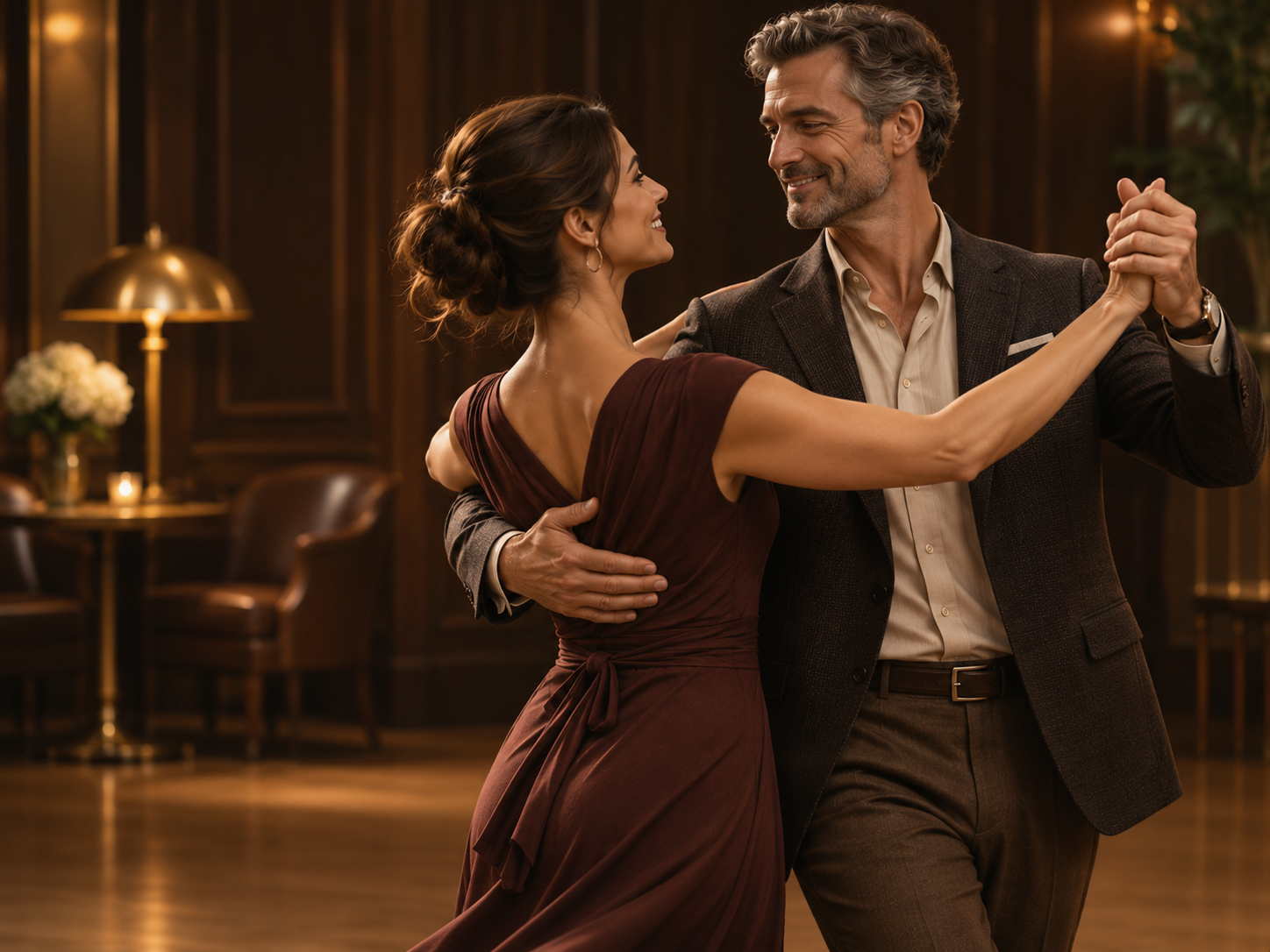
A casually dressed couple practicing social dance connection and frame in a warm studio setting
Lead and follow begin with communication: posture, balance, a comfortable frame, and an awareness of one another.

02 / FLOORCRAFT

Know the line
of dance.

Traveling dances—especially Waltz and Foxtrot—generally progress counterclockwise around the perimeter of the dance floor.

Imagine a gentle current flowing around the room. More experienced dancers who travel comfortably can move with that current along the outer lanes. Beginners, or couples practicing compact figures, generally leave the outside lane clear and use the inner area when appropriate.

Courtesy matters more than speed. Observe the floor ahead, avoid cutting across traffic, and adjust your figures to the available space. A good leader protects the partnership and those around it.

Inner practice areaCompact figures · awarenessCOUNTERCLOCKWISE · LINE OF DANCE
Traveling couples generally follow the outer counterclockwise path. Actual floor etiquette varies by venue and crowd.

03 / FIND YOUR RHYTHM

Two families. Many ways to move.

For beginning social dancers, it helps to distinguish the flowing, traveling character of Smooth dances from the more rhythmic, often compact character of Rhythm and Latin dances.

Smooth

Travel, continuity, and movement across the floor.

  • Waltz Graceful rise and fall · three-beat phrasing
  • Foxtrot Natural walking movement · smooth progression
  • Tango Controlled movement and sharp accents; technically grouped with ballroom Smooth/Standard, even though its character feels distinctly rhythmic

Rhythm & Latin

Distinct rhythmic character, accents, and social versatility.

  • Cha-Cha Playful syncopation and precise timing
  • Rhumba Measured, expressive movement
  • Swing Energetic, conversational movement
  • Salsa Flowing turns and lively musicality
  • Samba Bouncy, layered rhythm
  • Merengue Simple marching foundation, easy social entry point

These are practical teaching groups, not a strict competition classification: American Rhythm, International Latin, and social dance traditions have different official categories.

04 / THE BIGGER PICTURE

Good for the body.
Engaging for the mind.

Dancing asks you to listen, remember, anticipate, coordinate, and adapt—often while communicating with another person. It combines physical movement with cognitive challenge and social connection.

Research suggests dance can support cognitive health in older adults. A 2025 systematic review and meta-analysis of randomized trials found a small but statistically significant average improvement in cognition with dance interventions. An influential observational study also associated frequent dancing with lower dementia incidence, although that finding cannot establish that dancing prevents dementia.

That makes dancing a compelling way to stay active and engaged—not a guarantee against cognitive decline, but an activity that gives both mind and body something meaningful to do.

Mind
& Body

Memory · attention · balance · coordination · connection

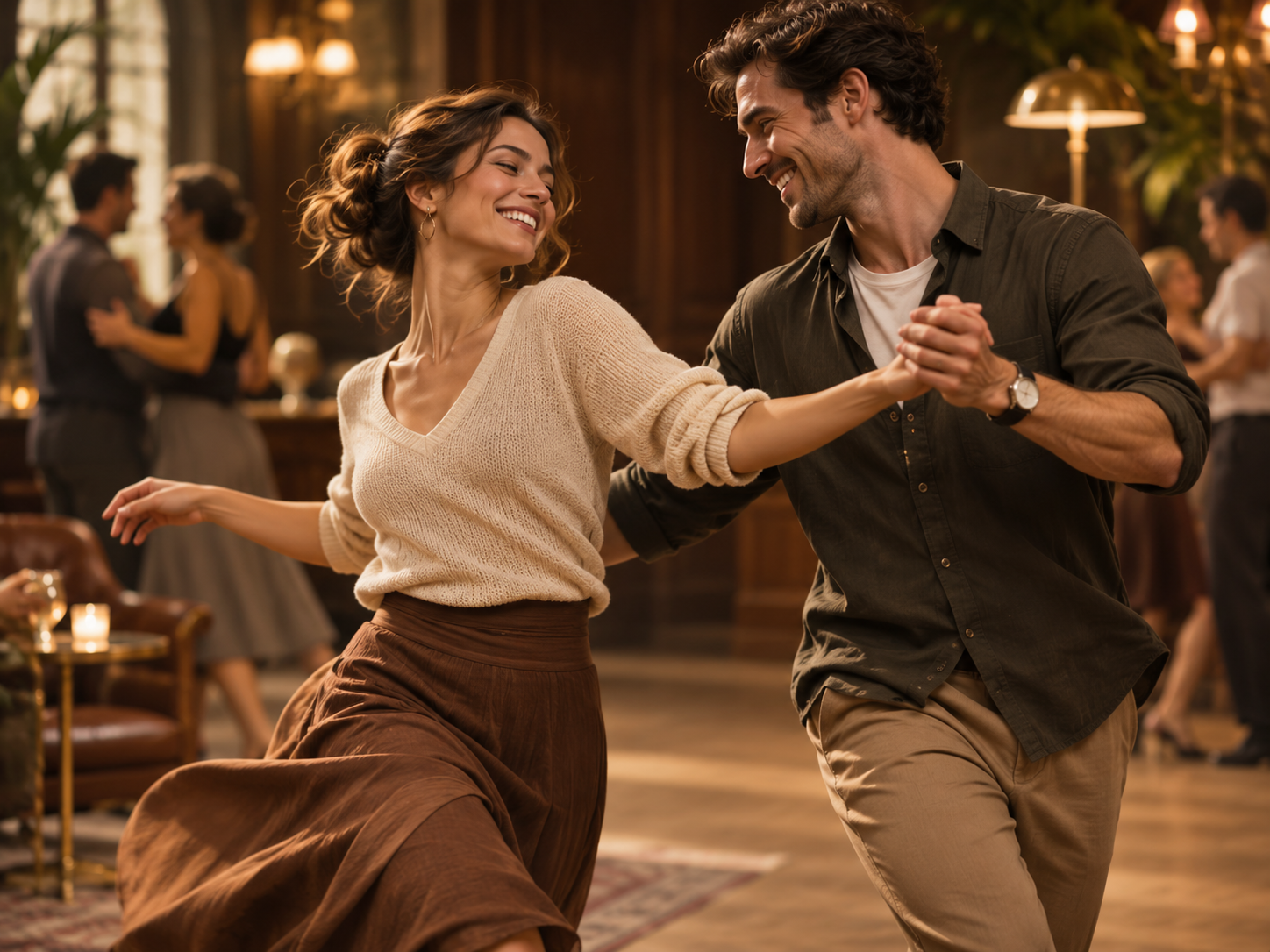
Two people enjoying social dancing casually in a warm lounge atmosphere
Dancing asks the body to move and the mind to listen, adapt, remember, and respond.

Think ahead

Recognize musical phrasing, remember figures, and make decisions in real time.

Move with intention

Practice balance, weight transfer, coordination, and controlled movement.

Connect

Respond to a partner, listen together, and share the experience of music.

BUILD YOUR FOUNDATION

The point isn't to memorize steps.
It's to enjoy the dance.

Confidence begins with a solid foundation.

Explore the Learning Center ↗